Vehicle safety has quietly transformed over the last decade. What used to be passive equipment, like airbags and crumple zones, now works alongside active systems that see the road, anticipate hazards, and take action. Advanced driver assistance systems, or ADAS, sit at the center of that change. Cameras, radar, lidar, and ultrasonic sensors feed software that nudges the steering, taps the brakes, or warns you when a car sneaks into your blind spot. It all feels seamless until even a small disruption knocks those sensors out of true. Then, the system cannot trust its own eyes, and neither should you.
In High Point, the need for precise ADAS calibration usually shows up after a windshield replacement, a front-end repair, a suspension change, or even a minor fender bender. Shops that handle High Point auto glass repair and body work see it every day. The question isn’t whether to calibrate, but how to meet manufacturer specifications every time. That requires more than plugging in a scan tool. It’s a careful mix of process control, the right equipment, and the discipline to stop and fix what doesn’t align.
What ADAS Calibration Really Does
Think about a forward-facing camera mounted behind the windshield. If the glass shifts the camera by a few millimeters or a fraction of a degree, the system changes its understanding of where the vehicle sits in the lane. Lane centering might begin to ping-pong, collision warnings might trigger late, and adaptive cruise control could leave too little gap at highway speeds. Calibration maps the camera’s field of view back to the real world so the software knows, with manufacturer-approved certainty, what it is looking at.
Radar behind the bumper needs the same treatment. A grill replacement or a tweak to the bracket can alter the radar beam. Without calibration, the car may misjudge closing speeds. Side radar involved in blind-spot monitoring needs to point precisely down the lane beside you, not angle toward the shoulder or into the next lane.
Manufacturers require either static calibration, dynamic calibration, or both. Static calibration happens in a controlled bay with targets, lasers, and careful measurements. Dynamic calibration happens on the road while a scan tool guides the process. Some models call for a hybrid: begin with static to set baselines, then validate with a drive cycle. The goal is always the same, to align the sensor’s “vision” with how the vehicle actually sits in space.
Why High Point Drivers See More Calibration Needs Than They Expect
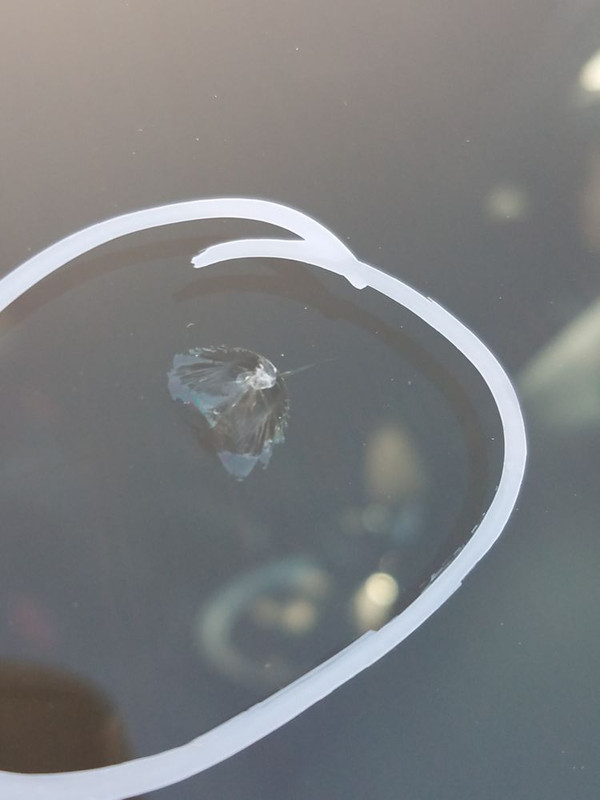
Around here, windshield work is common. High Point sits at a crossroads of commuter routes and delivery corridors, which drives up mileage and road wear. More miles mean more chips, cracks, and the occasional rock thrown by a truck on Business 85. Windshield replacement High Point customers often assume the job ends when the urethane cures. In reality, for cars with forward cameras, the installation is only step one. The next step is ADAS calibration High Point shops perform to bring the camera back into spec.
Street construction and potholes also play a subtle role. Hit a pothole hard enough, and the suspension geometry shifts a hair. The vehicle still tracks straight, but a camera or radar calibrated to the old ride height now sits at a slightly different angle. You can see why technicians doing alignment work start asking more calibration questions. For certain platforms, manufacturers require recalibration after an alignment, a coil spring replacement, or a ride-height adjustment.
The Manufacturer Specification Problem
Not all ADAS are created equal. Automakers release specifications that read like a recipe, but the ingredients and steps vary widely:
- Some brands set tight lighting requirements for static calibration, specifying the lux level, the color temperature of the bulbs, and even wall color to avoid glare. Others spell out floor level tolerance, often under 2 degrees of slope, and require precise vehicle-to-target distances down to the millimeter. Certain models demand that tire pressures, fuel level, and cargo load sit within a narrow band before the calibration counts. Many require wheel alignment verification, steering angle sensor resets, and ride height measurements to avoid stacking errors.
If this sounds particular, it is. The specifications reflect how fragile spatial measurements can be. A tiny error near the sensor becomes a larger error 50 feet down the road. The farther the system looks, the bigger the miss. Following the exact manufacturer sequence, not a close approximation, separates a reliable calibration from a hopeful one.
Where Auto Glass Work Meets ADAS
People think of auto glass shops as specialists with adhesives and urethane beads. That part is true, but the best shops also understand vehicle electronics. The glass itself forms the camera’s window, and subtle changes in glass thickness, ADAS calibration High Point wedge angle, and optical clarity affect the image. That is why OEM glass or true OEM-equivalent glass matters on camera-equipped cars. The wrong glass can pass a static procedure but degrade the system’s real-world accuracy, especially at night or in rain.
Mobile auto glass High Point services make life easy when a schedule is tight. The technician can come to your home or office, replace the glass, and restore features the same day. For calibration, mobile success hinges on preparation. A clean, level driveway, enough room for targets, power access for the scan and calibration equipment, and controlled lighting are not luxuries. They are part of what allows a mobile tech to hit manufacturer specs outside a shop. When those conditions don’t exist, a responsible provider moves the car to a controlled environment rather than forcing a calibration that may not hold up.
Side window replacement High Point customers don’t always face calibration, but some vehicles tuck blind-spot sensors or cameras into mirror housings and door modules. When a break-in shatters a side glass, wiring gets pinched, brackets bend, and mirror cameras can shift. A thorough post-repair scan will tell you if those modules logged faults. From there, the calibration steps follow the manufacturer’s book.
Static vs. Dynamic: Choosing the Right Procedure
Static calibration turns the shop into a lab. Targets with high-contrast patterns sit at defined distances and heights. The vehicle is placed centered and square to the target array. Lasers or string lines establish a thrust line. The scan tool handshakes with the vehicle, then prompts the technician through each step, often verifying target distances and angles before it accepts the calibration.
Dynamic calibration relies on a controlled drive while the scan tool watches live data. The software wants steady speeds, certain lane markings, and specific road conditions. For example, some systems require 45 to 65 mph on a well-marked highway, clear weather, and a sustained drive of 10 to 30 minutes. If traffic forces speed changes or lane markings vanish in a construction zone, the calibration may stall, and the process has to restart under better conditions.
Plenty of models require both. The static portion anchors the camera or radar within a known spatial framework. The dynamic portion then verifies the system under real road conditions and finalizes bias adjustments for variance in mounting or glass optical qualities.
The Hidden Variables That Undermine Calibration
Experience teaches you to respect the small stuff. Tires are a favorite. Underinflation lowers the ride height and changes the pitch angle of the vehicle. Calibrate with soft tires, then fill them to spec next week, and the camera is now looking at a slightly different horizon. Similarly, weight in the cargo area, a heavy roof rack, or aftermarket lift kits create geometry shifts that exceed what the manufacturer expects. You can still calibrate, but the system might not behave as designed, and in some cases the scan tool will refuse to proceed because the vehicle sits outside the allowable range.
Windshield mounting depth can also vary. On a repeat customer’s SUV, we measured the camera bracket depth after an insurance-approved aftermarket glass install. It was within tolerance, but just. At night, the camera struggled to pick up lane lines on rural 68, even though the static calibration passed. We swapped to OEM glass, recalibrated, and the issue went away. The fix wasn’t magical, it was optical. The OEM glass restored the intended wedge angle and image clarity so the camera’s algorithms had a clean signal.
Shop lighting matters in static procedures. Bright overhead sunlight spilling through a bay door can wash out target contrasts. LED shop lights with the wrong temperature make camera sensors hunt for edges. A good calibration bay has even lighting, neutral walls, and blackout capability for target areas. These are not gimmicks, they are basic controls for machine vision.
What a Competent Calibration Workflow Looks Like
Customers often want to understand what happens after “we replaced your windshield.” A well-run process follows a predictable arc while staying flexible for the car in front of us.
- Pre-scan and documentation. Confirm the vehicle’s ADAS options, retrieve fault codes, and document dash warning lights and windshield features. Check tire pressures, cargo load, ride height, and the state of safety-related modules. Installation with optical awareness. Use approved glass, brackets, and adhesives. Verify bracket alignment, mounting depth, and cure times. Clean the camera lens and windshield area carefully. Setup and environment control. If static calibration is required, set the vehicle on a level surface with a full fuel tank or an equivalent ballast, adjust tire pressures, and set the steering straight. Place targets with precision and lock the bay environment. Execute static and/or dynamic calibration. Follow the automaker’s service information step by step, no shortcuts. Use the proper scan tool profiles, adaptors, and software versions. If dynamic, select a route that meets speed and marking requirements. Post-scan validation and road feel. Clear completed codes, confirm no new faults, and test-drive to verify lane keeping, adaptive cruise gaps, and blind-spot indications behave as expected.
Those steps read simple on paper, but they demand repeatable habits. The biggest difference between a calibration that sticks and one that drifts is usually in the setup and environment control, not the scan tool itself.
Insurance, Liability, and Why Shortcuts Cost More
Insurers in North Carolina generally cover calibration when it is required by the manufacturer following a covered repair like a windshield replacement. The adjuster may ask for documentation that shows it was necessary. A reputable shop will include the pre-scan report, the calibration steps performed, and the post-scan confirmation. This protects the driver, the insurer, and the shop. If someone skips calibration to save time, the liability sits squarely on that decision. If a collision occurs and the data shows ADAS faults or disabled features, questions follow quickly.
Also worth stating plainly: a “no fault found” on a scan does not mean the system is in calibration. A scan reads electronic status, not physical aim. Calibration, by design, is what tells the system where it is. When a vehicle’s service information says recalibrate after windshield replacement, bumper cover removal, alignment, or suspension work, it is not optional.
Mobile Calibration in High Point, Done Right
Mobile auto glass High Point providers often offer calibration on-site. When it works, it is a time saver. The technician arrives with targets, lasers, and a battery stabilizer. The drive, if dynamic is required, happens on nearby roads that fit the conditions. A good mobile tech makes a quick environmental assessment, then proceeds only if the site meets the needs. If your driveway slopes too much or the street lacks reliable lane markings, expect a recommendation to complete the calibration at a shop. That is a sign of quality, not upselling.
Customers can help more than they realize. Clearing a space that allows the vehicle to sit with at least a few feet of perimeter room, confirming there is no heavy cargo onboard, and keeping pets and kids away from the target area makes the process smoother and safer. It also reduces the chance of disturbances that force a restart.
Practical Signs Your Vehicle Needs Attention After Glass or Body Work
Drivers often sense when something is off. A steering wheel slightly off-center, a new warning chime, or a lane keeping function that nags more than usual can all point to misalignment or calibration drift. Even without obvious signs, use the owner’s manual as your guide. If it says calibration is required after a certain repair, ask the shop directly how they plan to handle it and what documentation you will receive. Most modern vehicles also display a message after windshield replacement or service that prompts calibration. Take that prompt seriously.
The High Point Context: Roads, Weather, and Real Use
Our area sees its share of heavy rain, fog, and bright sun that sits low on the horizon during commute hours. ADAS cameras struggle most when glare or water film reduces contrast. A precise calibration does not fix poor visibility, but it prevents the system from adding its own errors. On a rainy evening along Wendover, a correctly calibrated forward camera maintains lane tracking where a sloppy one might drop out or worse, push you toward a line it misinterprets.
Construction zones add another layer. Temporary lane markers can confuse cameras, and radar reflections get noisy around metal barrels and work vehicles. Even when systems function properly, they might suppress certain features if the conditions fall outside their confidence range. This is expected behavior, but it reinforces the point: start from a precise baseline so the system can make accurate decisions about when to engage and when to bow out.
The Tooling Arms Race, and Why It Shouldn’t Define the Work
You will hear about multi-brand calibration rigs, OEM scan tools, aftermarket scan tools with OEM subscriptions, and vision-based targetless systems. The gear matters, but only in service of the process. A shop that chases new equipment but ignores setup discipline won’t deliver better results than a modestly equipped shop that follows the book to the letter. The best teams invest in both, modern tools and strict procedures, and they stay current with software updates since automakers refine calibration routines with service bulletins and updated parameters.
For radar and lidar especially, mounting hardware integrity matters as much as the calibration step. A cracked bumper cover that flexes at highway speed changes radar aim enough to create inconsistent performance. If you see a shop insisting on bumper or bracket replacement before calibration, they are protecting you from a calibration that would pass in the bay and fail on the road.
What Customers Should Ask Before Approving the Work
Conversations up front make for better outcomes. Ask who supplies the glass for camera-equipped windshields and whether it meets OEM specifications. Ask if the shop performs both static and dynamic calibrations when the automaker requires it. Ask how they document the process and whether they coordinate with your insurer. For High Point auto glass repair, a straightforward, confident answer to those questions signals a team that does this work often and stands behind it.
If you rely on a company for side window replacement High Point residents recommend, still verify whether your model uses cameras or sensors in the mirrors or door area and whether the shop will check and calibrate those after the glass install. Vehicles change quickly, and the good shops keep a database that tells them exactly what your VIN needs.
Edge Cases: Aftermarket Mods, Fleet Vehicles, and Salvage Titles
Aftermarket wheels and tires that alter rolling diameter, spacer lifts, or deleted front emblems can all interfere with ADAS. Trucks with leveling kits commonly need calibration, and some manufacturer procedures specify that any lift beyond a small range puts the system out of spec. Fleet vehicles that log high miles deserve periodic checks, especially if drivers report inconsistent ADAS performance. Salvage title vehicles, or cars repaired after severe front-end damage, require extra scrutiny because brackets and mounting points might no longer sit where the software assumes they should. In those cases, the shop should be frank about what the system can achieve and what limitations remain.
What Success Feels Like Behind the Wheel
When everything aligns, the tech might feel invisible, but the driving experience changes. Adaptive cruise keeps a steady, comfortable gap without surging. Lane keeping becomes a gentle hand rather than a tug. Blind-spot alerts fire at the right moment, not too early and not too late. On a familiar route from High Point to Greensboro, you stop noticing the system because it behaves consistently. That is the hallmark of a calibration following precise manufacturer specifications, not guesswork.
A Brief, Real Example from the Bay
A late-model sedan came in for windshield replacement High Point shops see often, a popular commuter car with a camera that controls lane keeping and automatic emergency braking. The driver mentioned the car had started giving random lane departure warnings after the original crack, which had crept across the camera’s field of view. We installed OEM-equivalent glass approved for camera clarity, verified mounting depth, and followed the brand’s two-part calibration: static in the bay, then a dynamic drive with steady speeds over 50 mph.
The static portion completed in one pass. On the drive, the scan tool flagged inconsistent lane detection near a tree-lined stretch where shadows broke up the lane paint. We repeated the route later in the afternoon with stronger lighting and the dynamic portion completed successfully. Post-scan showed no faults. The driver later reported the car felt “calmer” on the highway and that the brakes didn’t feel grabby when someone merged ahead. That change was calibration, not wishful thinking.
How to Choose a Partner for ADAS Calibration in High Point
If you already trust a shop for High Point auto glass repair, ask how they’ve grown into ADAS work. Look for technicians with training certificates, a calibration bay or mobile capability with the right environmental controls, and a willingness to postpone a calibration if conditions are wrong. You want transparency, not bravado. Shops that share pre-scan and post-scan reports, store photographs of target placements, and maintain a log of software versions are taking your safety seriously.
On the other hand, be cautious with rock-bottom prices that bundle glass and calibration without explaining the product used or the method. Calibration is not a line item to be rushed. It is integral to the safety system you and your family rely on every day.
Final Thoughts for High Point Drivers
ADAS makes driving safer and less tiring, but only when the sensors and software share the same picture of the world. After glass work, body repairs, or suspension changes, the calibration step ties everything back to the manufacturer’s baseline. Whether you opt for mobile service at your driveway or a controlled in-shop calibration, insist on process, documentation, and adherence to the manufacturer’s specifications. That is how you get consistent, trustworthy performance on the streets and highways around High Point.
If you suspect your vehicle needs attention, start with a scan and a conversation. Good shops will meet you where you are, explain what your specific model requires, and do the work to make the technology fade into the background where it belongs.